Featured

CITY2SURF 2019: REVIEW

Having already started my training for my entry to Ironman70.3 in November, I had a good base level fitness leading into City2Surf. An enormous event with over 80,000 runners starting from Sydneys Hyde Park all the way to possibly the most iconic beach in Australia, Bondi.

First things first, I achieved a PB of 53:38, so this was a good day. Last year I raced a 55:29. Awesome! Very pleased.

City 2 Surf – A 14km “fun” run, with plenty of hills that would make the most experienced of runners’ stomachs churn. Participants can walk, jog, skip, run, roll, or hop to the finish line. You can even stop off for a beer along the course if you really want. Parents racing with their prams – infants aboard, charity runners dressed as cartoon characters and superheroes, alongside athletes aiming for PB’s. This event has something for everyone.
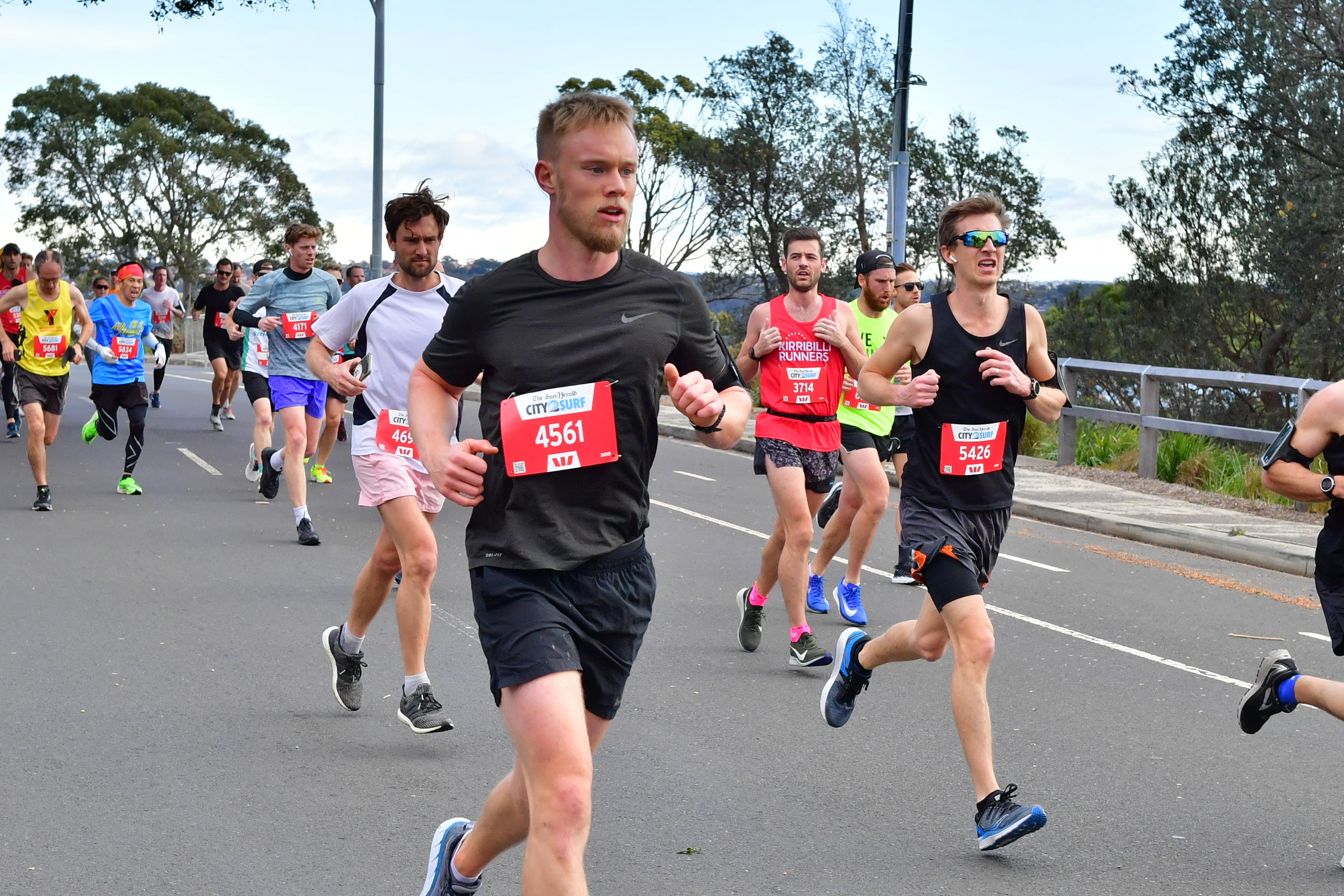
Heartbreak Hill Complete. My face doesn’t express the pain of what just happened.

PRE-RACE

If you live in Bondi, as we do, the roads alongside the beach are closed from around 6am (or earlier, I believe), which means buses cannot access the area to transport you to the city for your start. However, Transport NSW do provide bus transport from the south side of the beach specifically for C2S runners, providing you show your race bib, which you should all have with you, of course. A non-stop bus from the beach to Hyde Park, you’ll arrive at your starting paddock within 20-30 minutes or so. Very efficient, particularly when the roads are quiet! On departing the bus, it’s clear where the start of the event is, you can’t miss it. Easy.

80,000 people all in one park, absolute chaos, right? Not at all. Of course, you have to dodge people taking pictures, and you have to queue for your pre-race toilet stop in portable WC’s, which are never enjoyable, admittedly, but lets face it, you just get on with it, you’re not there to sit on the toilet for 10 minutes anyway. From what I could see, there wasn’t much in terms of sponsors/partners at the start line offering nutritional samples/drinks etc, but then again I feel that everyone is just raring to start. It would only slow the whole starting process down if everyone was messing around searching for freebies. The majority of runners at this point are in their starting areas. Red first, green, blue, yellow, the lot.

I felt I was very early this year. Jordanna and I arrived around 7:20am, I didn’t start until 7:55, with Jordanna 10 minutes later. We pottered around, no real rush, but as we wandered over to the red start I realised I should have just got straight into my group. Thousands of people already filled my paddock. I imagine I was near the back of the red group, lets say 6000-10000 people. Quite frustrating.

THE START

TOP TIP: If you’re wanting to achieve a PB, you’re a strong runner, AND you have experience in the race from last year – be sure to make your way to the front of your group to avoid being held up behind people for at least 2-3km’s.

NOTE: I am not an elite runner. I understand that in entering this event I am inevitably going to be held up, bumped into, slowed down etc by other people. It’s a fun run. I just think it would be interesting to see how my PB would be affected if I had open road to run down.

As soon as we started moving I knew I’d be dodging people for quite some time. The red group set off at 7:55am and as I crossed the start line I could already see people arriving at the top of the hill by the CocaCola sign at Kings Cross. William Street, from Hyde Park to Kings Cross is around 1km long. That means there are quite a few thousand people in front of me. I think all competitive runners know how frustrating it is to have to weave your way through people, but for this amount of time, it’s just painful. BUT, it’s my own fault, I should have known, and after all, this is a fun run. It’s up to competitive runners, like myself, to ensure we’re in a good position come race start.

Nevertheless, my first Km was 4:31, my slowest of the 14. All due to having to wait for others in front of me. This was the case for 2-3km’s until we reached Rose Bay, where the pack opened up, the roads widened, and I could see Heartbreak Hill approaching. Even at this point, there must have still been around 1000-2000 people ahead of me.
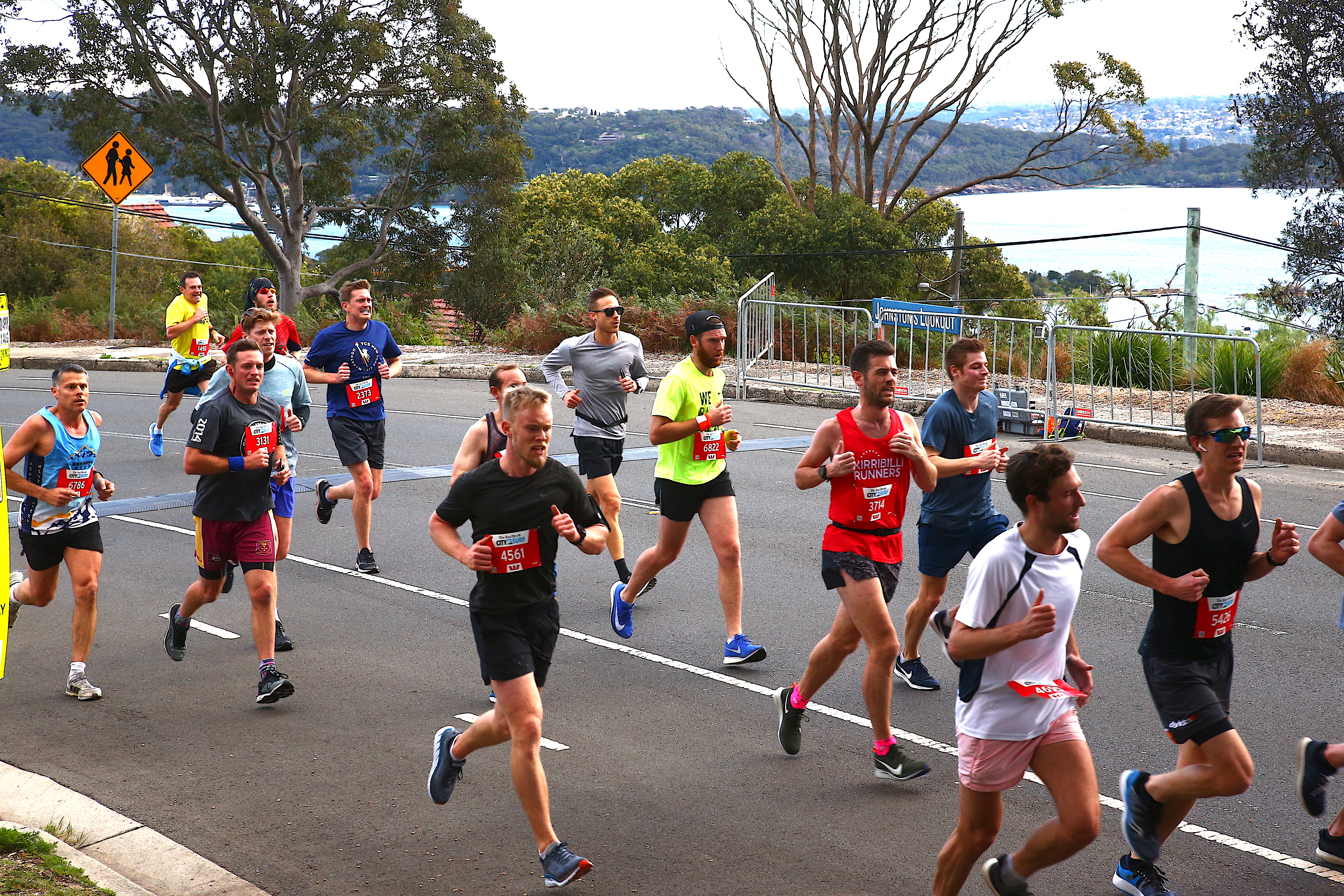
Around a quarter of the way to go before reaching the summit of Heartbreak Hill. Check out my facials (Bib No. 4561). I have officially entered the pain cave.

Before hitting the hill I needed a toilet stop, I just couldn’t run hard being irritated by needing to go. This also added at least 20-30 seconds to my time (annoying, but my own fault). Door open, out, and back on the road a few hundred meters to go before the ascent began; I was ready. I just ploughed past people at every opportunity, no mercy. Although I was frustrated with the number of people in front of me that I had to work my way through, it helps me psychologically. It’s part of my competitive nature that if there’s someone in front, I have to catch them – making me run faster. Result. 5-6km’s done before Heartbreak Hill. I was in a good position and still had a lot left in me.

Getting to this point was tough, there are hills to climb as soon as you begin the race, made that little bit easier by the support from spectators along the course.
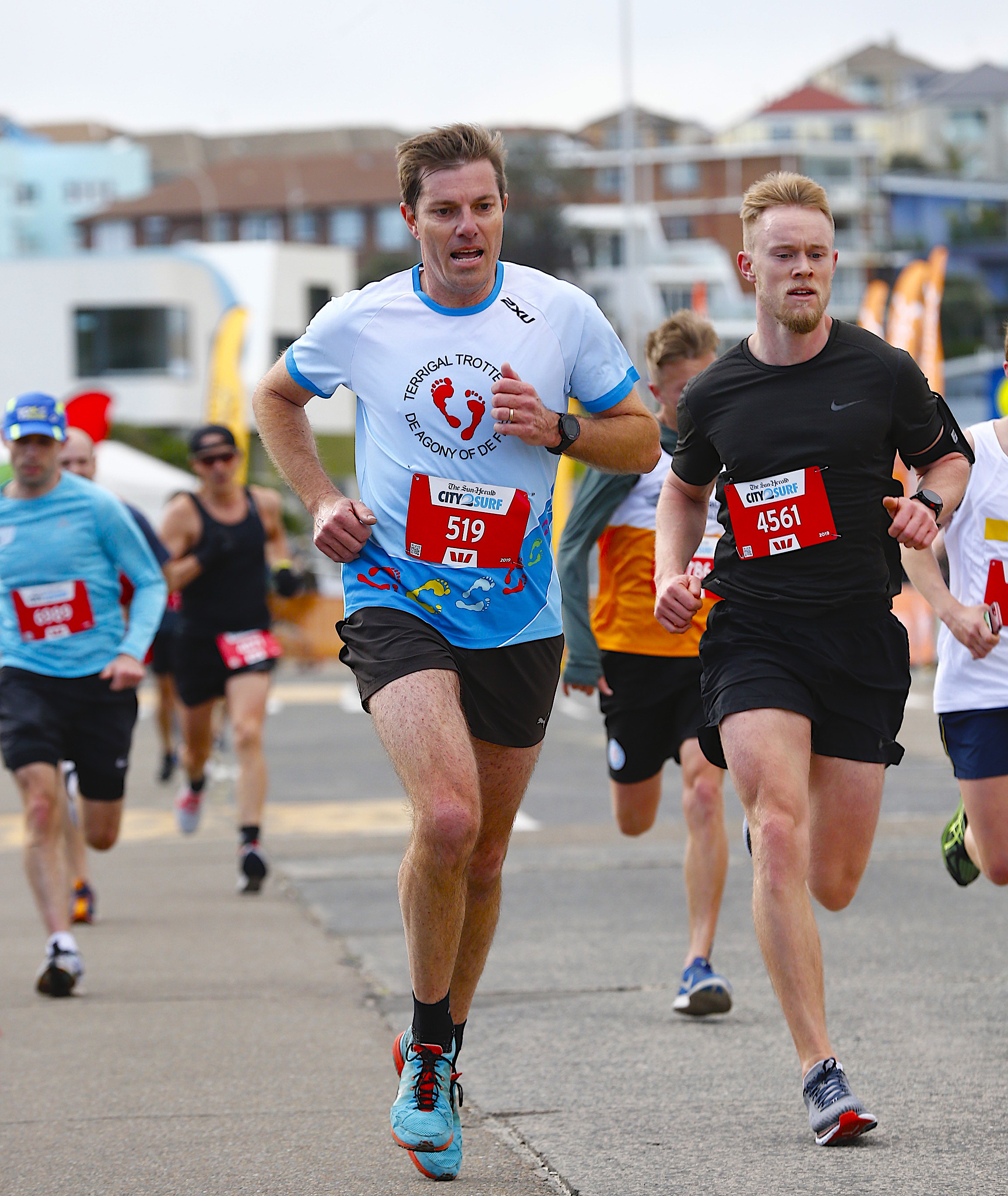
Attempting to sprint to the finish with whatever I’ve got left in the tank! So, that’s how my feet land on the ground when I run?!

SUPPORT & ENTERTAINMENT

As soon as you pass the start line there are spectators shouting words of enthusiasm and motivation towards every runner on the course. Whether these people have anyone running in the race or not, they’re happy to be part of the race day atmosphere. I think it gives everyone the opportunity to feel like a professional athlete for an hour or two, which is great.

Next are the live performances, the military brass band playing at Rose Bay, the Rock bands, the DJ’s, and of course the sponsors along the way. The entire population of supporters throughout the race are a credit to themselves for making the day what it is for so many thousands of people. Not everyone races to achieve a PB, some people race just to be active, some to raise money for charity. Having the support that C2S provides, gives those people with less enthusiasm to run, all the more reason to enjoy the day and dig deep on those hills!

Water stations seemed to be every few km’s too. Plenty of refreshments on course, toilet stops etc. I don’t think they’ve missed much here. One suggestion would be to have gel stations to supply supplements/food/sweets(lollies) for participants. But then again, its 14km’s, not 42, so do people really need this. I don’t think so.

All in all, I’d say this event is the best for overall course entertainment and support. It really caters for a spectrum of runners.

THE FINISH

If you know the area, once you arrive in Dover Heights you have around 4km’s to go to reach the summit you’ve been searching for all morning. You are then instilled with a false sense of security that your finish line is all down hill. This is simply not the case and could kill your chance of a PB.

Fortunately, I learned my lesson on this one from last years event. As you descend down Military Road, the winding route gives you a glimpse of the finishers area giving you a false perception of where the course leads.

On arriving at the bottom of the hill you must then race up Campbell Parade to then take a U-turn at Beach Road traffic light, back down and round to the beach!
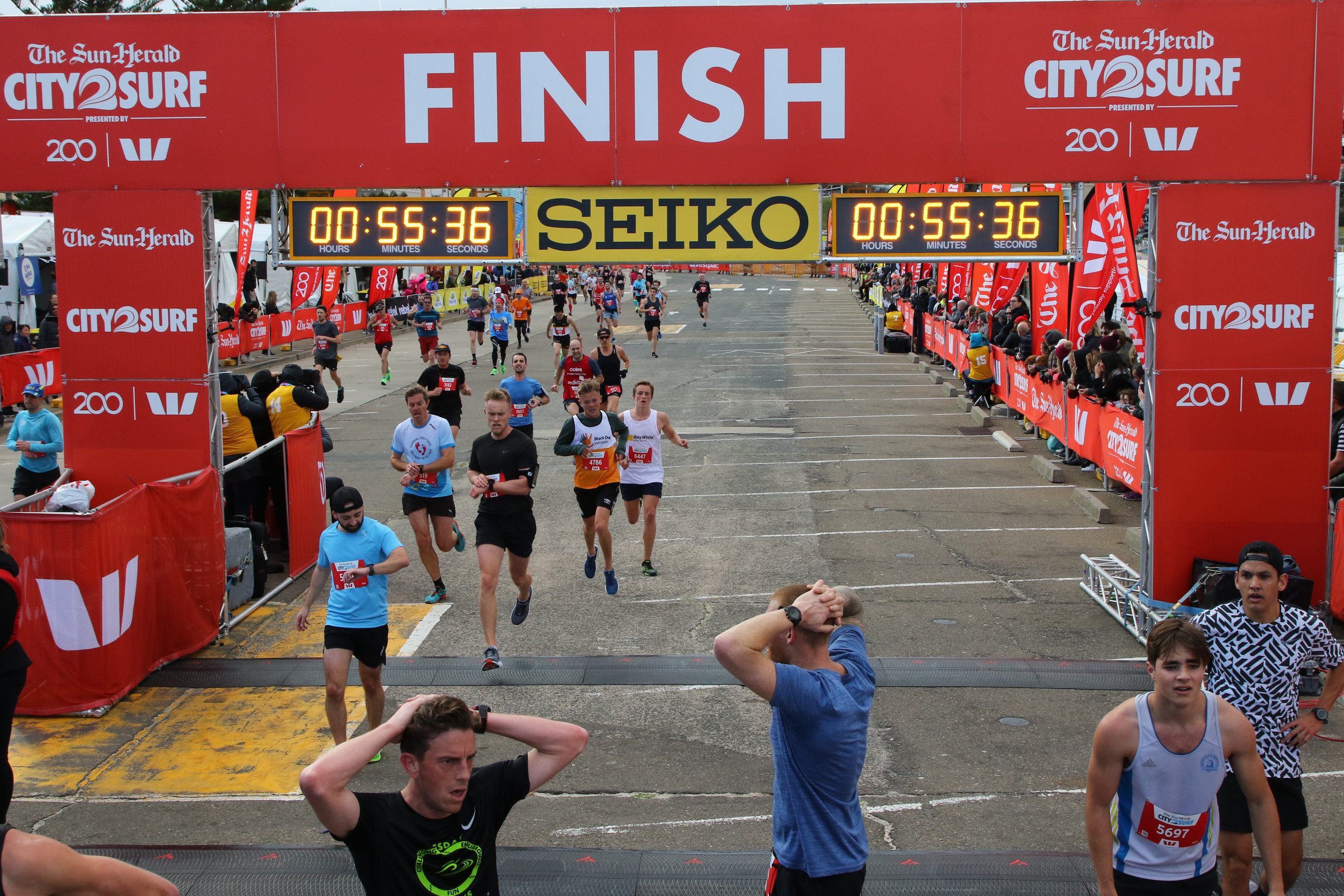
Crossing the line in an official time of 53:38. Just to confirm… the guy in the picture, above, I passed, as you can see here to the left of me; I told you if there’s someone in front of me, I need to beat them.

TOP TIP No.2: DO NOT SPRINT DOWN MILITARY ROAD WITHOUT RECOGNISING THAT ONCE YOU REACH THE BOTTOM, YOU STILL HAVE AROUND 1-1.5Km’s To go before you reach the end.

Now perhaps I’m missing something here, but I feel City 2 Surf organisers could do a better job with the end of race attractions. Whenever I’ve raced in the UK there have always been a diverse range of refreshments, you get a medal, a goodie bag with all kinds of things in it, supplement gels, bars and drinks etc. City 2 Surf had nothing (that I could easily see).

I imagined I would see a version of the pre-race expo at the end of the race too, but the best area I could see was a private area for West Pac bank account holders. Huh? I completely understand the break down of what kind of costs go into producing events such as this.. marketing, security, toilet facilities, participant packs, health & safety, timing systems, road closures, construction of event areas, and so on and so forth, but I just felt that once you had finished the race, that was it. Goodbye.

That being said, there are over 80,000 people filtering through a narrow lane in front of the beach, with the priority, I imagine, first and foremost being to get everyone finished and out safely, as opposed to clogging the area with bodies. What about producing 85,000 finisher t-shirts? 😀

A great event for everyone! I would thoroughly recommend getting involved in this race, no matter what your ability level. Personally, I need to have an event planned so that I have something to work towards. Aimless training just doesn’t do it for me. If you’re not into fitness, but want to get moving, perhaps you should consider planning ahead to this event next year. After all, you have to start somewhere.

GET MOVING!
2019 Ironman70.3 Western Sydney

Its been over two months since Ironman 70.3 Western Sydney 2019, and this is the first time I’ve wanted to start writing about it. I think the delay has been purely based on my disappointment at my race result, combined with the need to take a rest from 5 months of intense training, amongst everything else – family life, work commitments, social engagements, and a nice little trip away over Christmas. 

As of my previous post, Ironman70.3 Western Sydney, 2018 was the year I completed my first Ironman70.3 and I was very happy to have completed the event, albeit I knew I could achieve a better result with more rigorous and structured training. I achieved a result of 5:27:50 in this race, and I was looking forward to improving on this result in 2019!

Since the race in 2018, we have had the arrival of our daughter, Lilly. An unbelievable experience, and besides breathing, possibly the most natural thing I can do as a human being, having a child. 

Having a baby in the house has obviously changed the way we live slightly. Priorities have shifted quite dramatically in fact. Less time to spend on our own hobbies and interests, and more time spent getting Lilly to sleep, feeding, changing nappies, dressing her, chasing her around, and everything else. But most of all, watching her grow up and enjoying family life. Finding the time to train for endurance events has certainly been impacted, but I have just become better at managing my time. I’ve also become good at not do things that don’t get me to where I want to be in 12 months, 2 years, or 5 years time. Drinking alcohol, for example, now a waste of my time, no interest in going out drinking anymore. It just isn’t going to get me where I want to be. Simple. 

My point here is that a lot has changed in the past 12 months since I completed my first Ironman70.3. Being competitive and ambitious and wanting to compete in endurance events is tough when you’re a father with a full time job and no family on this side of the world to help with childcare, but its always possible. Perhaps other fathers in a similar position can relate to this post. Maybe it will enlighten you or give you some ideas on how you can work towards taking part in endurance events. Maybe 90% will sound like bullsh*t, and the other 10% is something you can apply to your training, your week, your life. Whatever the case, I hope you can take something from it.

Its never easy, but its always possible!

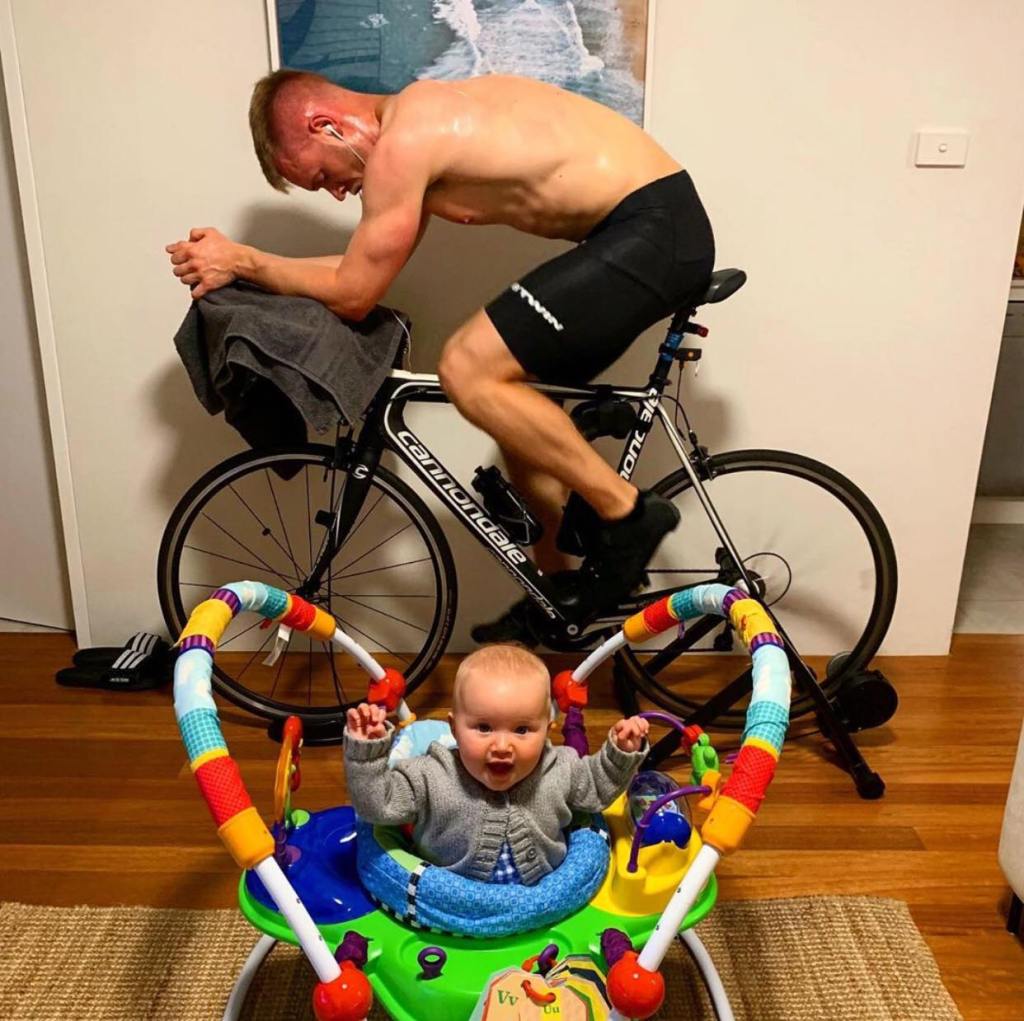
Bike training with my #1 supporter (and Jordanna on camera) – always finding ways to get the training in.
Intagram: @greg.myalterathlete

Training with a baby

I’m just going to take a working day out of my week and dissect it a little for you, so you can compare your day and see if it correlates at all. Below, was a typical Wednesday throughout my 70.3 training between July 2019 – November 2019. 

Wednesday4:30am wake up – shower, breakfast, out of the door by 5:10am. Bus into the city at 5:17. Arrive at work at 6:00am. Work 6am-2pm. Walk to the swimming pool at Hyde Park arriving at 2:30pm, in the pool by 2:45pm. 1 hour session – back out by 4pm. On the bus back home and out of the city by 4:20 – home by 4:50pm. Straight to pick up Lilly from day care. Home with Lilly by 5:30pm. Feed Lilly while Jordanna makes her way home. Spend time with Lilly and make dinner while Jordanna exercises. 6:30/7pm bath time. 7:30pm baby bed time (often could take 30-45 minutes to get her to sleep, and often still does). Eat dinner 8-8:30pm. 30-60 minutes to wind down before going to bed ourselves. Repeat. 

If we take the above and factor in how many times Lilly wakes up in the night screaming and crying, that’s pretty rough. And no, nobody has to have a baby and go through all that parenthood brings, but it doesn’t take away from the fact that its exhausting at times. All the more reason to have your days structured as lean as possible to allow you to maximise your output in the time you have available for yourself. 

It is hard, however, when you’re physically and mentally drained from work knowing that you still need to run a 10km tempo session in the evening once you’ve picked baby up from day care and started prepping for dinner. Its certainly important to understand how you’re feeling and knowing when you need to take some rest and recovery. Plenty of sleep and rest, when possible, is essential for any athlete, let alone time poor fathers, and the like, who need to be focused on their day job and family before going out running for an hour, even 20 minutes!! I definitely made myself a little unwell at times by not resting enough during the training period before this race. Rest being something I’ve learnt to incorporate into my training and event prep moving forward. 

The intensity was tough. It certainly wasn’t easy to train at such an intense rate, months at a time, but it helped me to become more efficient and effective with my time. Don’t get me wrong, we still found ourselves watching Netflix at times on an evening to switch our brains off; we’re not machines. But, if we take a look over the course of 4+ months of training, this was pretty rare. To be honest, I don’t really care about watching TV, spending hours scrolling through social media, or watching movies. I become disinterested pretty quickly and I’d rather be doing something more productive. But that’s just me. No wasted hours (or as little wasted as possible). 

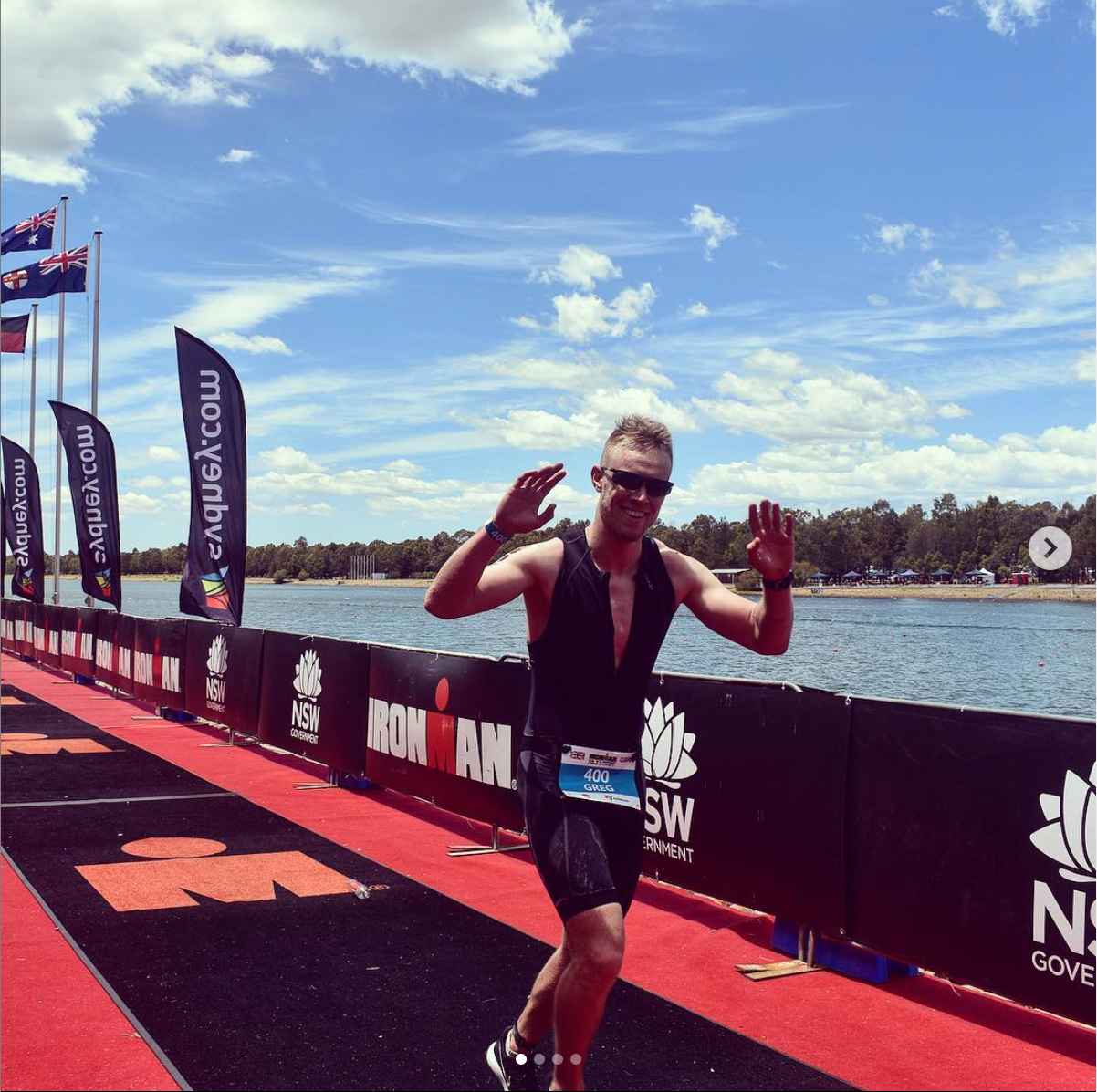
It appears I have a little smirk on my face here. I can assure you I had no feeling of pleasure on finishing this one. Disappointed in the overall time in the end. But obviously please to have completed my second Ironman70.3.
Instagram: @greg.myalterathlete

I’m not going to waste peoples time sugar coating everything, trying to make training, family life, work and everything look perfect like all these Instagram fitness influencers portray. Training for an Ironman with a baby in the household is really, really, really, really f*cking hard. Reading this blog may seem like its not that tough, perhaps that’s because I’m purposely trying to give you a bit of insight into how you could do it, or maybe its just genuinely not hard for you, I don’t know. I guess a lot of it comes down to your own situation. What freedom you have through your job, maybe you drive to work, do you live in a city or a suburb, do you have grandparents/family living locally, the list goes on. All kinds of factors can influence your ability to train for an endurance event. Nevertheless, training is still hard work. If you want to participate in endurance events you have got to alter your mindset and decide what your biggest priorities are so that you can filter out all the unnecessary sh*t and get on with smashing out training in preparation for the big day. 

Preparation is key

Let me just be clear. Just because I’m writing this blog and giving you guys advice about how to train effectively while maintaining a healthy family life and optimising your time, it doesn’t mean everything runs smoothly for me 100% of the time. Far from it. 

To be honest, I give myself a rough training structure week by week based on what I know I can fit into my week. Low and behold it gets to Tuesday and I’ve planned a long swim, but for whatever reason I have to stay at work for an extra hour or two and now I’ve lost two hours and I’m in a rush to pick Lilly up from day care before making dinner, and I’m now swapping my swim session for an evening run.

We have to remember that you can prepare as much as you like, you can have everything detailed down by the minute.. BUT obstacles do get in your way at times, it just happens, f*uck it, you work with what you’ve got. However, being prepared and then having to alter that preparation in some way is far better than not having a plan or being prepared at all, right? So, when something does get in the way and everything doesn’t go to plan, its important that we don’t stress, we relax, and find a solution to the problem as quickly as possible. The more time you spend sobbing about how you couldn’t get to your swim session, the more time wasted because you’re too busy wiping your tears, picking your nose, and making dumb excuses. There has to be a solution. If human beings can send guys into space and land them on the moon, I’m pretty sure you can figure out an alternative way to get 30-60minutes of training in. Get home, go running, job done, no excuses. 

The week leading up to Ironman70.3 Western Sydney was certainly not my best week. It was a taper week, of course, so training wasn’t particularly intense, but I just had a busy long week at work. 4:30am wake ups every day, broken sleep, long days on my feet, training. I was just very tired all week. Even packing the car on the Friday afternoon felt rushed and tiresome. I was hoping for a relaxed week of getting everything ready for race weekend. Friday evening came round and Lilly was a little under the weather. We were staying in a two bed cottage with my training partner, Hugo, and Grace. I had nowhere to sleep besides the bedroom with Lilly. Night one – terrible night sleep. 

Up and out early in the morning to take a look around the venue, warm up swim, view the course, and all the other race weekend sights. Very busy day walking around, not ideal when I’m preparing for a race the next morning. I also didn’t eat very much during this time, another error. All my own fault, not good enough. Poor preparation for the day before the race. 

That evening, Lilly was still unwell, and slightly worse than the night before, fever, irritable, AWAKE. Another night of poor sleep, but this time I had to be up and at it by 3:30am to set off to the Regatta Centre. I could already feel that all my preparation over the past 5 months was becoming more and more irrelevant all because of the last 48 hours. I was going to have to dig in hard today, harder than I originally thought. 

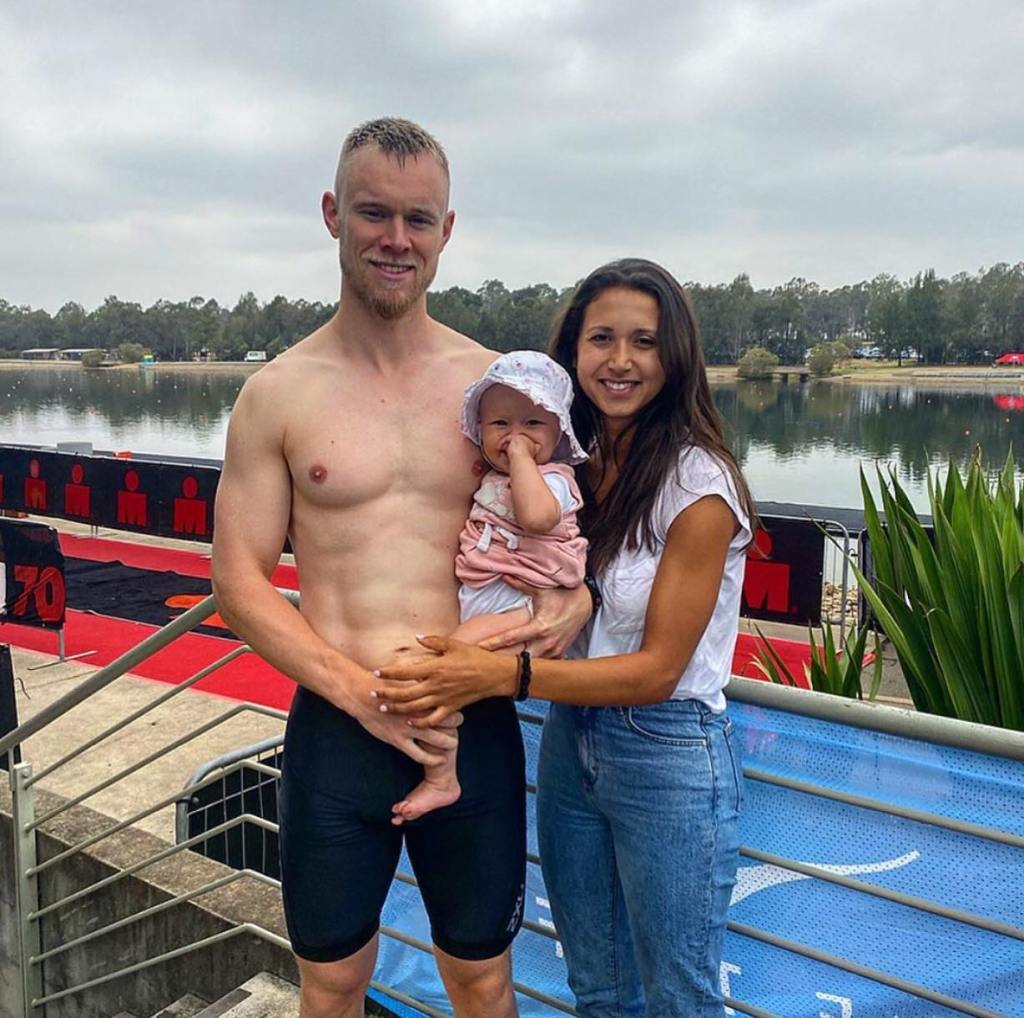
Post training swim family photo. Couldn’t ask for more support from these two! Even when I’m grumpy, tired and hungry!
Instagram: @greg.myalterathlete

Race Day

We arrived at the Sydney International Regatta Centre at around 5am. Before we began our day of mental and physical pain, we still needed to rack our bikes, pick up our timing chip, and get settled and warmed up ready to start at 6:45am. 1hour & 45 minutes sounds like a long time when you’re just trying to complete three tasks, but when you have to think about traffic, hundreds of other people trying to do the same thing at once, nerves, warming up etc its nice to have that time before hand just to gather your thoughts and try to relax. 

Hard to stay relaxed when all your training has come to this moment. Athletes train for months for one event and it is of course often their full time profession, I imagine they’re used to all the race day action. But for us guys that work full time while training, taking care of the family, and everything else, it’s a f*cking big deal standing there waiting for your wave to be called up to start the race. How many times have you woken up at 4:30am to go for a run, go to work, take on a 90km ride, or swim for an hour in the pool after a long day at work??? Today is the day you’ve been talking about to your mates for the past 4 months. All you can do now is give it everything you’ve got. 

Our wave got called and we ran down to the start line. We were sent off into the water in pairs, running down the walkway and diving into the lake. I had a good start to the swim, although I didn’t feel relaxed until around 1km in. Compared to last year, I was flying. No one seemed to be going past me, I just kept overtaking people, but I still didn’t feel that great. I think it was perhaps just pre race nerves knowing that I had to perform, but my prep over the past couple of days just wasn’t up to scratch.

I left the water, dizzy and tired, but I knew I had beaten my time from last year. Great result. I ran into the transition area, found my bike and got changed and on the bike as quickly as possible; again, faster than the previous year. 

As soon as I started riding I had an immediate hit of lethargy in my legs. I just couldn’t get going at a pace I knew was competitive. After around 2-3km’s I had already begun cramping in both calves, and into my quads – disaster. I was extremely frustrated at this point as I obviously knew I still had roughly 3 hours worth of riding left at this pace. I had to just keep pushing through, slow down my pace even further and try and take on as much nutrition as possible while riding to see if that helped. I clearly hadn’t eaten or rested well over the past couple of days. 

The rest of the bike course was just agony, cramping, lower back pain, and the thought of not beating my time from last year rolling around my head for 3 hours. That’s tough. I finally make it back on to the 5km home stretch ready to throw by bike in the lake on arrival, allowing it to become part of the regatta lake scenery. I got to the bike finish, ran through transition and just got too it on the run course. Here’s where I had to regain some time. 

After 1km my whole right leg cramped up. From my calf, quadricep, hamstring, to my hip flexor, I just couldn’t run. As it was so bad, my first thought was that I was going to have to limp the whole 21km’s – that was going to be a long long course. Again, I decided to walk while taking on a bit more nutrition and wait for the pain to ease off before I would start running again. I did just that, and after roughly 5 minutes of walking, I was back up to race pace, now I had to pick the pace up even further. 

Fortunately, the cramp never came back throughout the course and I was able to hold a pretty strong pace throughout. Of course, the run didn’t come without any further pain. There are plenty of people walking at this point and my legs did feel to be getting progressively more and more stiff by the minute, but I didn’t want to start walking when I had already lost so much time. 

If anyone has done the Ironman70.3 Western Sydney in Penrith you’ll obviously know what the run course is like. After around the 11/12km mark you begin your course around the regatta lake itself. The cruel thing about this is that you run around the lake thinking the end is in sight, you can see the finish line in the distance and you are thrilled! But that’s only your first lap. The course loops you back round to where you came from to send you on another lap of the lake before finally entering the home straight. 

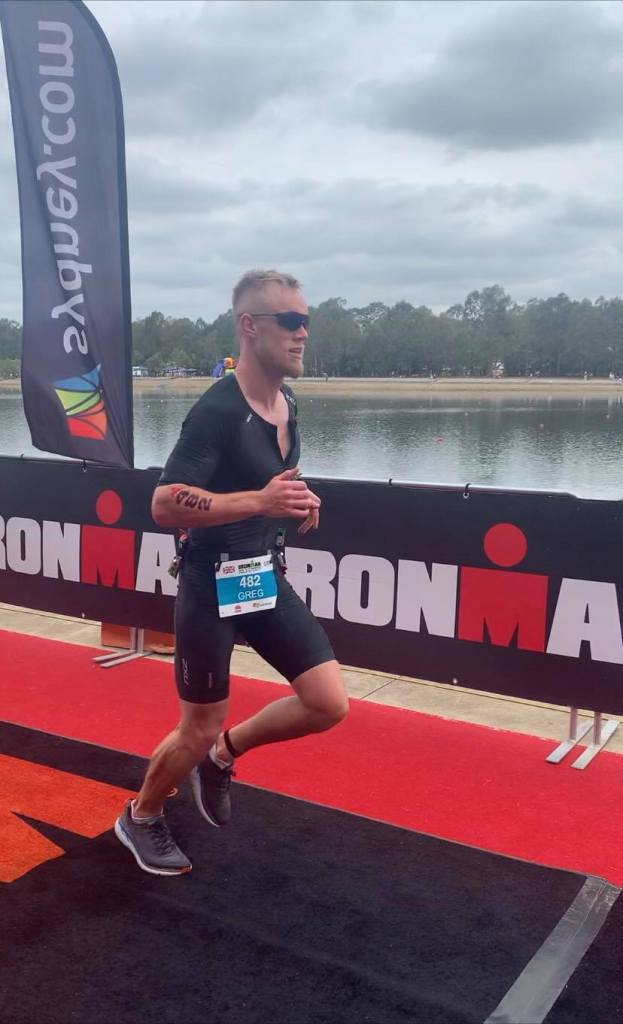
I entered the red carpet frustrated, angry, pissed off. Jordanna was taking pictures of me running through the finish line. Last year I waved and smiled at completing the race. This year, I couldn’t look. Very disappointed at the finish line. I didn’t beat my overall time from last year and I just couldn’t accept it. I did, however, beat my run time by 5 minutes, which was a plus. 

In the grand scheme of things, from a personal perspective you always feel what you do as a person is normal and that everyone could do it. So, when I finished the race but didn’t get the time I wanted, I was disappointed because I felt like completing a 70.3 was an average thing to do. But realistically, its not. Its massive. I trained for a long time while being a father and partner, while working full time, living on the other side of the world to any family, amongst everything else that life brings. That’s fucking tough, and I’m really pleased that I have now completed two Ironman70.3’s.

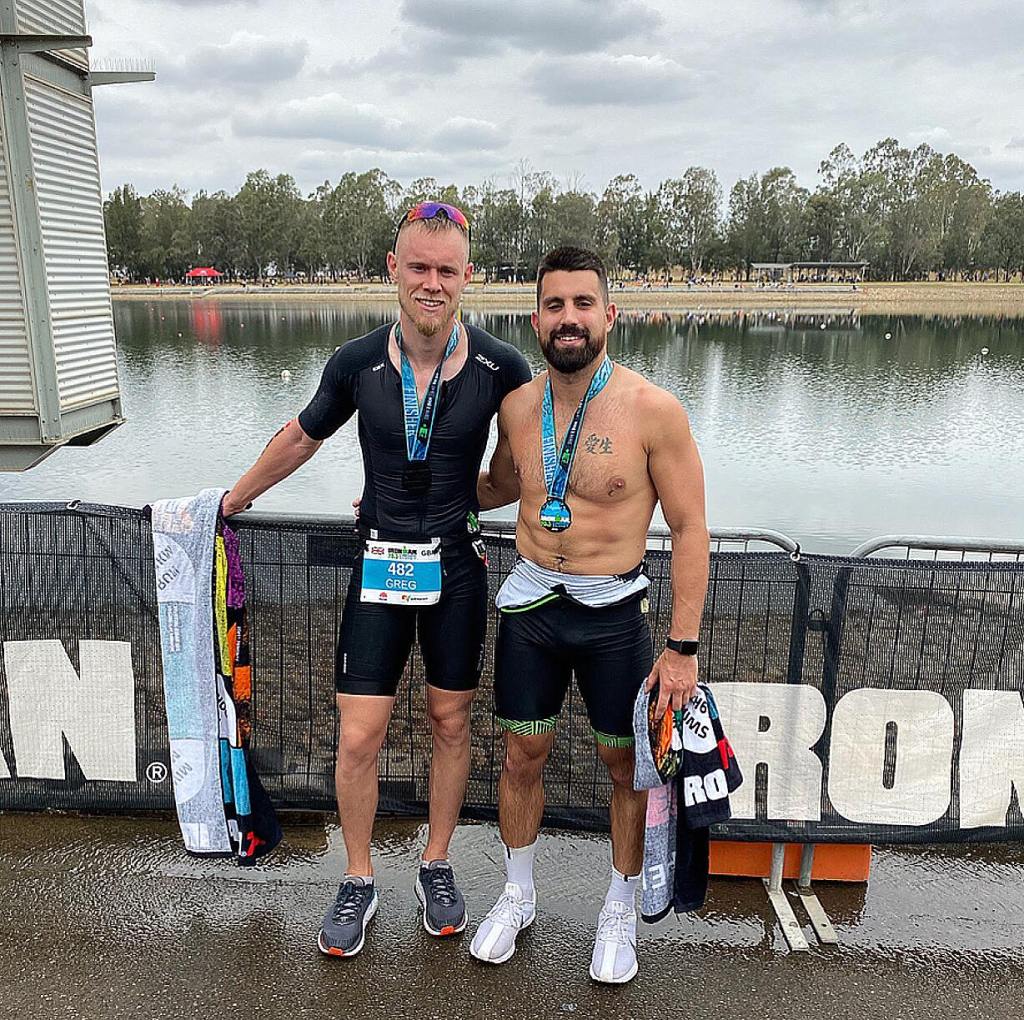
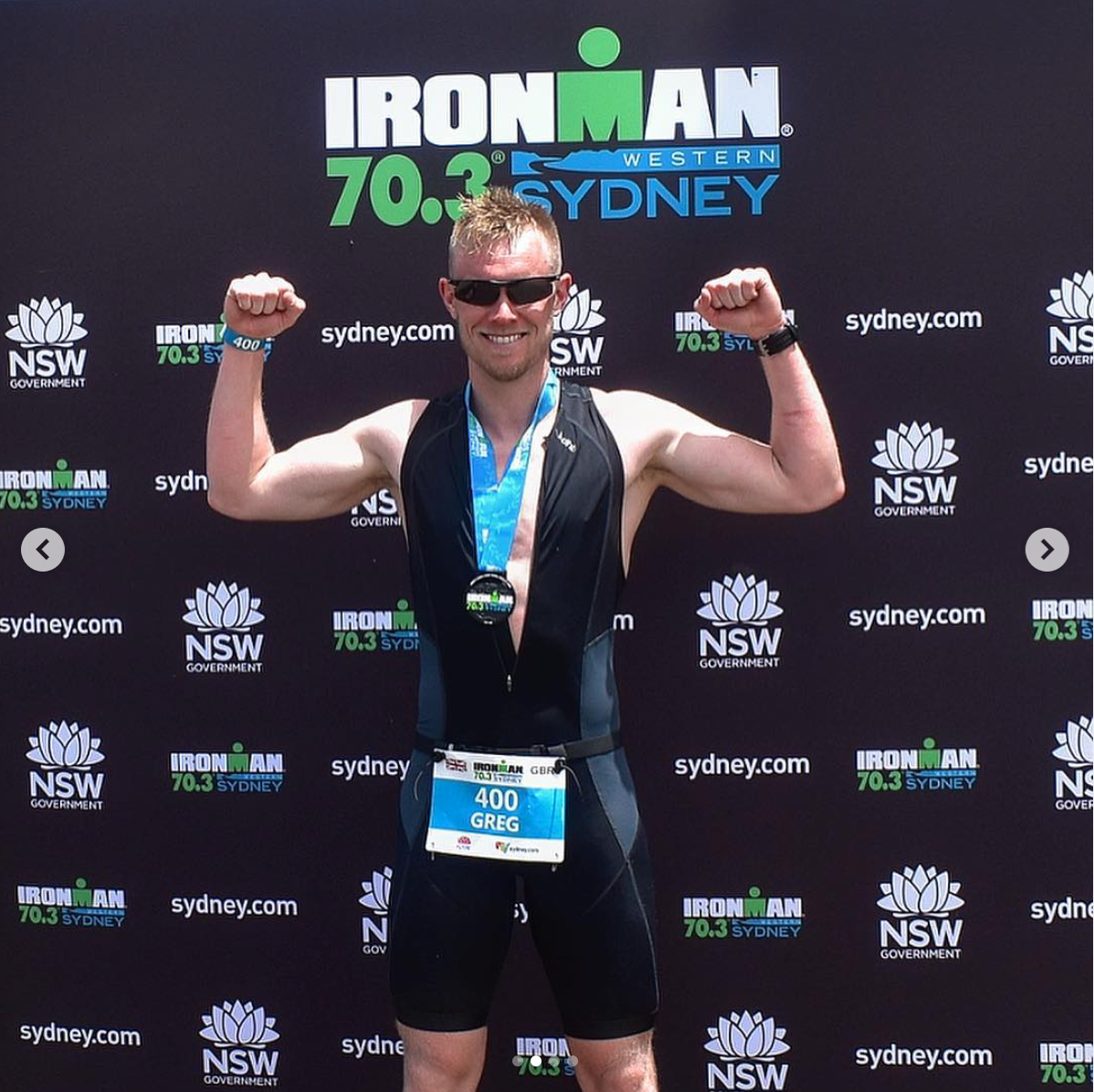
Managed to crack a little smile in the end. Tough day out, but onto the next one!!
Instagram: @greg.myalterathlete

One of the biggest things for me when training for, and completing, an event such as this is that it allows me to feel like an athlete again. Its been nearly 10 years since I finished my career in professional football, having spent the best part of 10 years of my life from 12 years old to 20 years old thinking I was going to spend the rest of my life in professional sport. Completing an Ironman, Marathon, 10km race, or an open water swim allows me to feel like an athlete again, and that’s a pretty nice feeling. Perhaps you want to do the same? 

Please do not think that doing all this is easy! It is not. You have to WANT to do it. I WANT to do the training and compete, but I don’t go out drinking and partying every weekend either – because I don’t fucking like drinking (anymore), so I don’t waste my time with it. I spend time training and with Jordanna & Lilly. 

I speak to plenty of people and everyone seems to think they would ‘never’ be able to complete an Ironman. BULLSH*T. Of course you can, you just have to want to and be prepared to stop doing pointless shit that doesn’t get you to where you want to be. 

NEVER EASY, ALWAYS POSSIBLE!!!

I F*CKING HATE SWIMMING

I F*CKING HATE SWIMMING!

Its Wednesday afternoon, and I’ve just finished being on my feet at work for the past 8 hours. I was up at 4:30am to get ready and off to work for 6am in the city. At least I had a good sleep though. I got 6-7 hours of sleep, broken down into small manageable chunks of 2 hour intervals (sense the sarcasm) due to Lilly waking up 4 times in the night. 

Its pouring down with rain and I’m walking to the Cook & Phillip Aquatics Centre, Hyde Park, where I have my midweek swim training session. When it rains, it buckets it down here. My feet are wet and this umbrella isn’t big enough for both myself and my rucksack. I’m tired, I’m wet, and I f*cking hate swimming. A swim seession is not something I want to be heading into right now. 

Todays session is all about distance; 3500m should cut it – how exciting! That’s a total of 70 lengths of a 50m pool, back and forth, and back and forth, and back and forth. So much time to think about anything and everything. What do you think about when swimming!? There are plenty of people in the pool. Are they enjoying themselves or do they dislike it too? I’m curious.

Don’t get me wrong, I obviously wouldn’t swim if I really hated it that much, but its not directly the swimming that I enjoy doing – Its what swimming allows me to do that I enjoy. Ironman, triathlon, keeping fit, becoming a stronger swimmer! Those are the things I like about swimming. 

The purpose of this post is to give people the opportunity to think differently about why they are training. Whether its an Ironman, triathlon, marathon, 10km race, or losing 5lbs, this will definitely be relatable for some people. Being dedicated to something isn’t always easy, no matter how passionate you are about it. BUT, it is important that you continue to possess a positive mindset when you just feel like shit and you do not want to spend 60 minutes being uncomfortable flapping your arms and kicking your legs in a big bowl of chlorinated water. Perhaps there are people in the audience who just need to know that there are others who find it tough too. You’ve just got to keep banging the drum (as my Dad would say). 

MY WEEKLY SWIM SCHEDULE

I’m not going to break it down into too much detail, but my weekly swim schedule comprises of 3×60 minute(or so) workouts:

Monday – Technique session 

Wednesday – Distance

Friday – Distance/Technical 

That’s three times per week doing something I dislike doing. Fun. Without fail, every time I’m walking through Hyde Park, I’m thinking about how much I don’t want to go swimming while counteracting this with the obsessive need to be better than my last event. I’m obviously not a professional triathlete, but I work with what I’ve got and I work hard with it.

Now, I’m not a negative person, so take what I’m saying with an understanding that I am well aware that I don’t have to train. Plus, I find it quite funny that I hate swimming. In fact, inspiration for this post came when Jordanna and I were chatting about our day and I happened to tell her that “I f*cking hate swimming” – we laughed and I decided to write about it. I know I hate it, but I want to compete in Ironman events and the like. What am I going to do? Complain about it and quit, or just shut up, find a solution and get on with it? I say shut up and get on with it. 

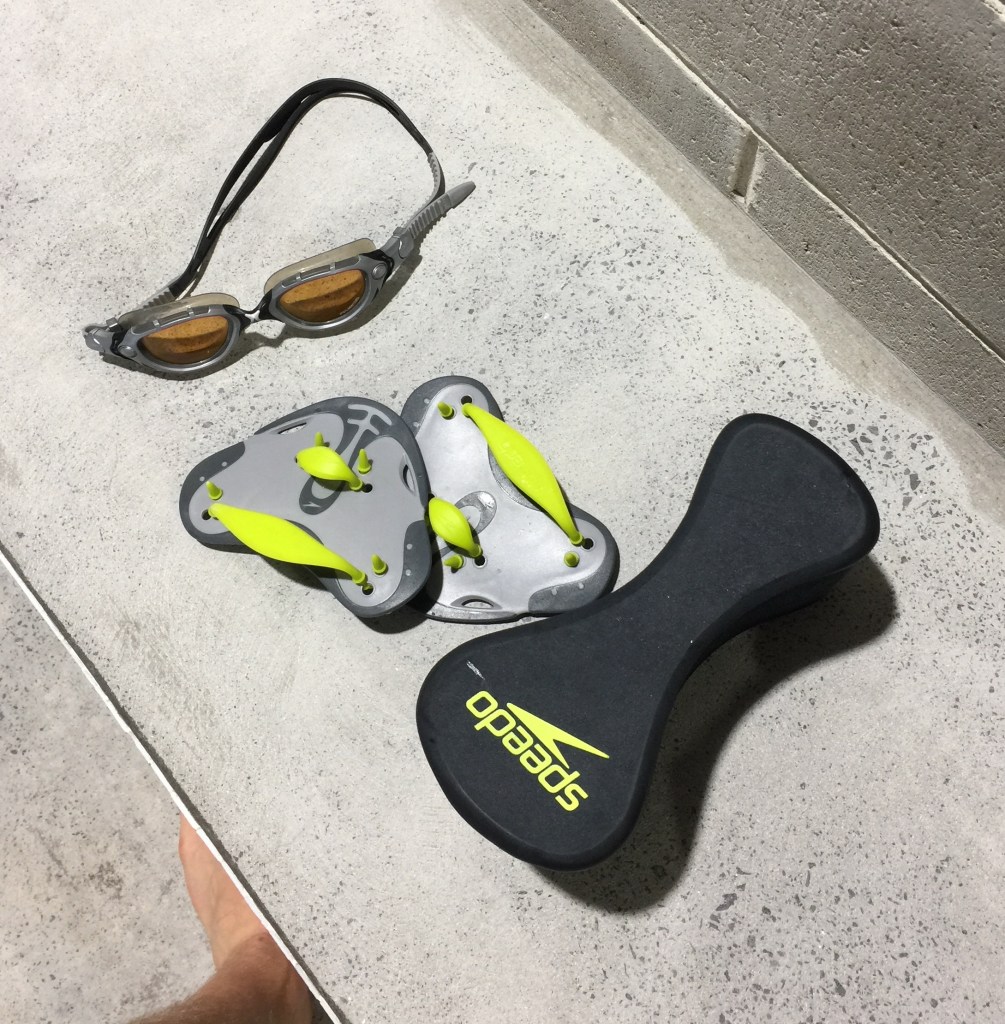
My swim training equipment. Pretty sure this is all I need. I definitely prefer technique sessions to distance..

WHY DO I SWIM SO OFTEN? 

Firstly, my swim time in the 70.3 last year was 38 minutes. At the time I was pleased, I had never taken part in a competitive swim before and I was aware, based on my training, that it would take me around that time. However, quite some time has passed since then and I feel my technique has developed somewhat since November 2018, forcing me to feel that 38 minutes was a bit of a soft effort. Perhaps I’m being a bit critical there, but I want to do better this time around. 

This brings me to my first reason. I swim because I want to be better. Better than last year, better than the guy swimming in the same lane as me, better than anyone in the race. Albeit I am well aware there are going to be people who are better swimmers than I am, I still want to perform. Perhaps I should consider getting myself a swim coach, or join a swim club? I’m sure this would help me improve, but I don’t want to commit to that just yet.

In the meantime, I always go in the ‘fast lane‘ at the pool regardless of who is in there. Now, I’m not slow by any means, but I’m also not the fastest in the water. However, by going in the fast lane, I’m surrounding myself with people that are potentially going to overtake me. Swimming with these people makes me swim faster and work harder so they don’t overtake me. If I swim three times per week, surely I’m going to develop strong enough to beat my time!!

If you haven’t heard of Malcolm Gladwell’s 10,000 hour rule, then look it up. Basically, Gladwell suggests that it takes 10,000 hours to achieve greatness. Although some have accused his work of being inaccurate, I believe we can all take something from the 10,000 hour rule, regardless. Its surely just basic math. Check out this funky case study;

‘Greg and Jordanna have never swam before in their lives. They cannot swim. If they jump in a pool of water, they will sink and drown. Both need to train to be able to swim 1.9km in 12 weeks time. To reach the target, Greg is going to swim three times per week for a total of 3 hours. Jordanna is going to swim once per week for a total of 1 hour. They are both going to conduct the same training programme, with Greg’s training obviously being scaled to accommodate the extra hours. Who will be faster on the day of the race?”

Now, the case study can be heavily critiqued, but you get the gist. Greg will achieve a faster time. Back to reality, last year I was training 1 to 2 times per week in the pool at best. More often than not it was once. I was working a lot of hours and Jordanna was pregnant so I didn’t want to leave her on her own when she was still working full time too. I’m a firm believer that I want to progress and do well in triathlon alongside my other interests, but I need to balance this with providing Jordanna the opportunity for a rest from family life too. I swim three times per week because I know I need to spend time in the water to keep improving and better my time from last year, but I also need to give Jordanna some ‘me’ time. 

Although this post is about how I f*cking hate swimming, I still enjoy the feeling of accomplishment once I’ve finished. I might be tired, I might want to relax after work, but when I get out of the pool after 3000m and an hour worth of swimming, it’s a great feeling. All pumped, knowing the session was a success. Saying that, not every session is successful. One or two of the sessions could be terrible because I feel slow, I haven’t eaten/drank enough during the day, I feel tired in the water, every day is different. I just try and make the most of how I feel at the time. 

HOW DO I GET THROUGH THE SESSIONS WHEN I F*CKING HATE SWIMMING? 

As I said, when I’m in the water I often feel like the session could be going better. My legs feel tired, I’m mentally drained from speaking to people all day at work, I didn’t eat enough earlier in the day. While I think about these things, I just remember why I’m doing it, and how good it will feel once I’ve finished. Come race day, I’ll compete, and it will be over in a flash. I just try and enjoy the whole process. If it was easy, it wouldn’t be worth doing, right? 

I also often just think about each length of the pool at a time; how’s my breathing? Can my pull be stronger? Is my kick efficient? All of these questions are running through my head. I’m also thinking about work, getting home to Jordanna and Lilly, what I’m going to make for dinner, is Lilly going to sleep well tonight, what event should I book next, why is that guy in my lane doing backstroke when the sign for the lane specifically says ‘FAST LANE – FREESTYLE ONLY’?

Training is kind of like my meditation. I think about whatever I think about when I’m in there. It doesn’t matter what it is. I’m doing the work, I just think about whatever pops into my head. When I get tired, I keep banging the drum and graft through it. I’m not going to stop and get out – that’s just out of the question. 

Over the past year or two I’ve started to read more, particularly books that offer insight into mastering the mind, embracing the ups and downs in life, and appreciating life and working hard to achieve whatever it is you want. Reading helps me to relax. I used to hate it. But now I know I was just reading the wrong books. I would be disinterested and more often than not, I’d fall asleep while reading. 

Books such as The AlchemistThe 4 Year Olympian, The Monk Who Sold His Ferrari, and David Goggins: Can’t Hurt Me have given me food for thought on how to get through training, while balancing work, family, and still working hard to achieve my goals. Through this, I have become more self-aware and I have been able to apply some elements of these books into my training. I believe that reading these books has helped me to overcome times during training where I have wanted to stop when it gets tough, and they have provided me with a vision of where I want to be in 2,3,4 years time, as opposed to what I’ll be doing next week.

Four of my favourite books (so far) surrounding mindset.

If you take a read of David Goggins: Can’t Hurt Me he talks about how he has developed callus’ on his mind through years of battling through painful times in his life. Each battle has helped him become stronger and has enabled him to accomplish multiple achievements in the fitness world, alongside his completion of three Hell Weeks and overcoming an adverse upbringing. Perhaps reading his book, and others, could offer you an alternative perspective on things that might just inspire you to keep working hard? This certainly struck a chord with me and has been extremely influential in enabling me to see how I can alter my mindset towards training and competition. 

Finally on this one, I’ve also adopted a long term thinking strategy. Having children, as I’m sure all parents can understand, seems to make life pass very quickly. Its been 7 months since Lilly was born and it only feels like a week ago. My point being, if you keep starting things and then stopping after a few weeks, or months, just because you’re tired, or it gets hard, then your whole life will have passed you by and you wont have achieved anything you really set out to achieve. I would 100% regret it if I was to quit running, or swimming, or cycling. You’ve just got to keep banging the drum. Its 100% worth it come that race day finish line feeling!

I f*cking hate swimming, but I’ll love the feeling of accomplishment once I cross the finish line in a couple of months time!

Never easy, always possible!

HOW MUCH DOES TRIATHLON COST? TRIATHLON ON A BUDGET:

Green Point Reserve: Sydney, NSW. Great spot to run/cycle to.

One of the reasons participation rates are much lower in triathlon when compared to other sports is that it’s just so expensive; particularly when you have a baby to pay for!! Of course, the mental and physical strength required for triathlon also plays a major role in peoples desire to train and compete in this sport, but lets call a spade a spade, its expensive! Even for a beginner, buying all equipment required for each discipline, regardless of the triathlon distance and what you want to achieve, is an expensive task.

To be clear, I don’t believe in going cheap on everything, particularly when I’m spending so much time training for competitions. If you’re going to put a great deal of your time into training, you need to invest in some good quality gear. After all, you’re investing in yourself. You of course don’t want to be buying the cheapest helmet that doesn’t protect you, or buy a cheap bike that can’t handle the distances. I believe there should be a good middle ground. Perhaps scope out what you should spend more money on, and what you can afford to go cheap with. Check for second hand bikes for example.

To this point, 14 months into my triathlon journey, I have taken part in just one triathlon – Ironman70.3 Western Sydney. I now have my second event in November and I’m hoping to beat my time from last year, and having had some experience in the race, I decided to invest in some more equipment to allow me to train more specifically and compete at a higher level.

Heres a list of nearly everything I’ve purchased so far and at what cost (EST);

Bike
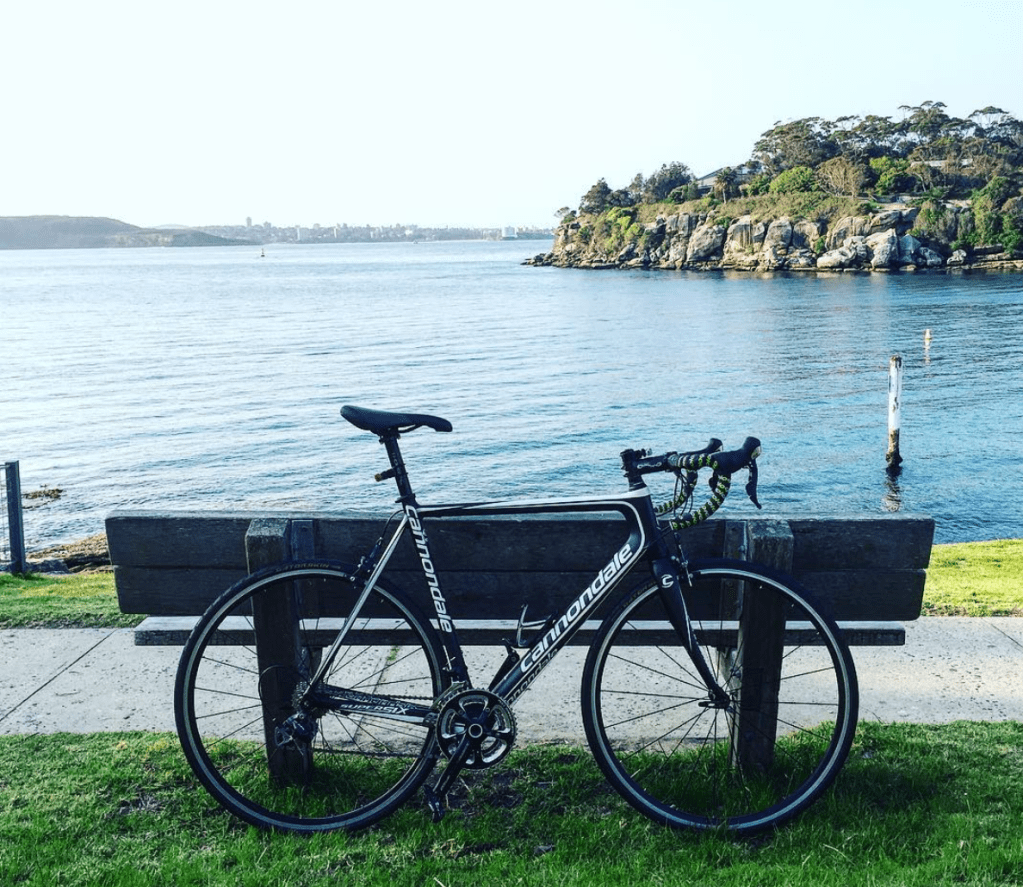
Cannondale Supersix – $900 (Gumtree – fantastic condition. Purchased July 2018)
Bontrager Starvos Helmet $140 (Don’t want to go too cheap here)
Bontrager Shoes & Shimano Cleats – $180
Cycling tops/shorts/jacket/socksDecathlon has everything you need here at very affordable rates compared to high street stores such as Specialized or Giant – $150
Indoor Bike Trainer – $89.99+ (Amazon is your best bet here)
– Bike Servicing – $100 (Basic service. No alterations required. Will need another one a couple of weeks before race day)
Aerobars – Decathlon $34.99
– Water Bottles – $10
Bike lights – $20-$50 for a good set
Spare inner tube/pump $20-30

RUN
HOKA ONE ONE – $159.99 (plus extra shoes as you train and enter race day)
Garmin Watch (Forerunner 225 bought 3 years ago in England) – Forerunner 245 available $469AUD. Could also last you 3-5 years (Good investment)
– T-shirt/shorts/socks/jacket – anywhere from $30+ each?
– Running/cycling glasses – Oakley start from around $160+. On Amazon you can pick them up for $30+ for a lesser branded style. Obviously quality comes into play quite significantly here I feel.

Swim
Zoggs performance shorts – $39.99
Speedo Finger paddles & Speedo Elite Pullbuoy – $29.99 & $34.99
Swim Pass – $124.80 (20 passes) (3 sessions per week – 20 weeks of training; you do the math)
– Trisuit – At 2XU you’re looking at $200+. Decathlon trisuits start from around $49.99
Zoggs goggles – $49.99+ ESSENTIAL – you don’t want to go cheap here
Westsuit – 2XU $300+

**Add nutrition costs to this – gels, snacks, protein powders, other supplements throughout training and competition

**Entry fees – Ironman70.3 $486 (2018 & 2019) – you may have also entered some smaller events to get you race ready ($$$)

As you can see, that’s around $3000 worth of equipment right there (not including entry fees), and I’ve been very savvy with my purchases. What about if you were to buy the slightly more expensive range of equipment? A sparkling new bike, a more prestigious indoor trainer, a better wetsuit? You’d be at $4000-5000+ and you haven’t even started training yet! How does that work!!?

HOWEVER! With the cost of participation comes a great understanding that this is my hobby. I enjoy training for these events and so I’m obviously happy to spend the money. This post is for the likes of myself, and anyone else out there who doesn’t yet want to be spending $6000+ on a new triathlon bike without spending some time testing the water and refining training and performance to ensure this is something you really want to become more invested in.

Added to this, we have to remember that not all triathlon distances would require you to train as regularly or spend as much money. Sprint distances, for example, would probably be a more appropriate entry into the sport, requiring a smaller investment as you wouldn’t necessarily need equipment that takes you a great distance. The nutrition required for a sprint event would also differ from that needed for an Ironman distance. It’s all about researching and working with what you’ve got. What best fits your lifestyle, budget, and intentions in the sport.

One of the key elements to take out of this post is that the one-off costs to triathlon are initially pretty high. But once you’ve invested in the expensive items, they should last you 2-3 years, maybe? After this, much smaller costs are incurred, alongside the entry fees, of course.

If you’re wanting to get into triathlon, shop around to see what you can find at the best price. Have a scroll through Amazon, and while you’re at it, add some nappies and baby wipes to your basket!!


5 ESSENTIALS: TIME MANAGEMENT FOR TIME POOR DADS

Lets face it, when you have a baby life changes a little. You spend many nights waking up 3 or 4 times per night (or more), get up early for work, finish work, change nappies, feed baby, make dinner, wash baby clothes, bibs… the list goes on and on. So how do you have time to train for an Ironman or any triathlon for that matter? I only have one baby in the house, so if you have more, managing your time effectively is even more important! 

Here are 5 ways you can maximise your time when you have a baby and you’re training for triathlon. Adapt them to whatever your occupation, however many children you have, wherever you live in the world, whatever event you’re training for. 

Micro-manage your day: Complete tasks fast!

Give yourself time limits to complete tasks i.e taking out the bins, tidy the lounge, wash up, ironing, make dinner, showering. Now I don’t mean set a timer on your phone for 60 seconds to take the bins out, but what’s stopping you just getting tasks done fast? Don’t let them snowball from one simple thing, to ten different things. Theres a lot to get done. If there’s something to do, do it! Don’t waste time. 

I’ll give you an example. Between 5pm-6pm I might need to prepare dinner, get baby’s bath ready, change nappy, tidy living area, entertain baby, all before heading out on a 10km run with dinner being ready to cook on my return. How can I make that hour as efficient as possible so that the time is well spent? 

Well, firstly, I don’t turn the TV on and slob out on the sofa as soon as I get home. I don’t sit flicking through Instagram and wasting my time on there. And I don’t sit on the sofa twiddling my thumbs waiting for the rain to come. I just get on with what I need to do and I get it done fast.  

This goes for other parts of my day too. What can you do while you travel to work? Do you drive to work? In which case, can you get up earlier to train or get some tasks done so you don’t have to do them later on? I catch public transport to work – 1 hour there, 1 hour back – I make the most of the bus journey by catching up on emails, listening to training vlogs, reading up on training methods, prioritising my day. 

What can you fit into your day? Instead of watching TV or scrolling through social media, what can you do to help improve the way you spend your time? 

Waking up v’s Bed time: 

Decide what time of the day you operate most efficiently. I have to go to bed early, I just can’t go to bed late as well as getting up at 4/5/6am. Between 9-10pm I’m in bed and pretty much asleep. Generally speaking, I’m exhausted from training, baby, work, public transport, cooking dinner, tidying the house etc etc. I use my time effectively when I wake up early. 

On a normal day, when Im going to work, I might be up anywhere between 4-6am. If I’m off work my alarm is at 6am. Depending on priorities, I’ll get some work done, blog, breakfast, train, look after baby. The main thing is I get shit done. Having a 5 month old means there is potential for some sleepless nights, which at the moment is pretty regularly. She just can’t stop waking up in the night – I think something to do with teething, but we’re not quite sure. 

Anyway, sometimes its hard, sometimes I struggle to get up in the morning, but it’s essential, otherwise there comes a build up of tasks and then nothing gets done. If there’s one thing to do, get it done, otherwise that one thing will have built up into 10 things and so on, and so forth. 

Sharing responsibility of baby: 

Of course, this goes without saying, assuming there are two of you parenting the child, its important to communicate with each other and ensure you both have time to do the things you enjoy (as well as looking after baby). 

Take it in turns to baby sit while the other trains or goes to their pottery class, or sees friends, or reads a book. Then when its your turn, make the most of the time you have. Set out a plan of what you’re going to do. “Okay, when you get back at 5pm, I’m going for a run for 1 hour before making dinner.” Done. How easy was that. 

Maybe I’m the only one, I don’t know, but do you not get mentally exhausted sometimes when entertaining baby, regardless of how much you love them? Take time for yourself, but make sure you communicate with your partner. 

Prioritise tasks – write lists: 

If you don’t know what you need to do in the time you give yourself, your time will be wasted deciding what you need to get done. Write things down, prioritise the things most important in your day. Set out your training plan. What does it look like? 

Monday – Swim, Run, Tuesday – Bike, Wednesday – Swim? Write it down and then organise when you will complete it. 

What time? During your lunch break? Straight off the bus after work? Then whose cooking dinner and which one is looking after baby? Have you been food shopping yet? 

So much to think about. Set out when you’re going to swim so that when you leave work at 5pm tomorrow you need to bolt straight for the pool, no excuses, no nonsense, GET SHIT DONE. Don’t waste your time, its extremely valuable. Particularly when you have a child. 

Dedicate time: 

What works well for me is that I dedicate two days per week where I put in some Km’s in training. Saturday morning is my key day. 6am road ride, anywhere between 3-4 hours, plus a road run of around 10km/45-60minutes. This is locked in every Saturday morning. Jordanna likes running later in the day so this works well for us. Plus, by the time I’m home, its 9/10am and mum and baby are just about woken up. Weekdays are flexible for training, usually swimming straight after work, or running when I get home from work. Dedicating a day or two just means you know you have to do the work and you know you’ll be getting something done. 

It is of course hard when you get that phone call from work and you have to stay late, or somethings gone wrong and your day has just been extended an extra 3 hours. I get it. So, if you know you don’t work on certain days – get some training locked in! We all know there are stumbling blocks every week. How can we work around these, should anything happen? Whats the solution?

I NEEDED A CHALLENGE!

Here’s a little bit about me, Greg Pearson, and why I’m writing this blog.

My first Triathlon was the Ironman70.3 Western Sydney in November 2018. I booked the event back in April of the same year with no hesitation after feeling like I needed to do something big and test my body’s capability in a much more rigorous event than I had ever previously competed. Having watched numerous videos on Ironman events; the gruelling training, the psychological battles on the field, the relentless will of all competitors to cross the finish line – Ironman was something I wanted to be a part of. The dedication, determination and desire of these people to complete an Ironman is inspiring. I hadn’t even started training and I wanted to do one the next day! 

The joys of reaching the red carpet

Growing up, I was always the fittest person on the field. I had big lungs. I played every sport under the sun, including cricket, football, golf, and tennis, with football taking president. Like many kids growing up in England, I dreamed of playing in the Premier League alongside Thierry Henry, Paul Scholes, and David Beckham. Having trialled at a few teams as a 12 year old including Manchester City & Leeds United, I began my footballing career at Huddersfield Town FC where I went on to gain myself a professional contract back in 2011. 

After a short spell at Huddersfield Town I parted ways with the club. I began a career in semi-professional football where I spent the next 6 years at a few different clubs, while working and studying at university in Manchester. Throughout this time, I was always extremely disappointed with myself that I didn’t achieve everything I was supposed to in the footballing world, having spent so much of not only my own time, but my parents time, working towards developing a career in professional football. From 12 years old the weeks would include training and matches three times per week, with Dad travelling all over the country to watch us get beaten by the likes of Newcastle 6-0. It must have been difficult to watch at times. I’ll always be grateful for the time spent by my parents helping me to achieve whatever I wish. Ultimately, on graduating from university I needed a change of scenery, a different lifestyle, to see another part of the world.

In 2017 I packed up my things and boarded a plane to Australia, firstly to travel, but secondly to find opportunities that I wasn’t interested in finding in England. I needed some excitement and I needed to be out on my own with no one to rely on but myself. After witnessing some beautiful places and spending what I had on partying along the east coast, I headed back to Sydney to set up camp. 

In no way was the transition tough in terms of adjusting to the cultures of Australia and any form of language barrier of course, aside from my thick Yorkshire accent, but it was tough nonetheless. Living in 8 bed dorms in hostels and moving from one place to the next for the first 8 months wasn’t exactly fantastic while working full time, but I worked it out, because I had to. I’ve met some great people over the course of my time in Sydney, and early on I quickly developed a love for the city. The beach one way, the city the other, Sydney is awesome!

THE BABY

As I move on to WHY I’m writing this blog, 6 or so months after meeting Jordanna, I booked myself the Ironman70.3 Western Sydney. Great decision.

In June 2018, Jordanna and I found out that we would be having a baby. Very exciting, although initially quite overwhelming. Both foreign citizens living a few thousand miles away from any family, my thoughts were that I should cancel the Ironman. With baby due in February 2019, I didn’t think I would have the time, resources, and money to be able to purchase all necessary training equipment, swimming passes, or coaching sessions if required. A bike, helmet, cleats, pedals, cycling clothing, spare tyres, tyre pump, running shoes, goggles, swim shorts, tri suit, wetsuit; the list is endless, and not to mention the entry fee! What about baby clothes? Toys, books, food, bottles, crib, hospital bills, doctors fees, car seat, a pram? Priorities! Would I really be able to commit so much to competing in the Ironman? 

The debate on how much time I would have to train and prepare properly circled my head for quite some time. If I’m going to do something, I want to smash it. I want to win (maybe a little over ambitious). Where would I find the time to go cycling for 2-3 hours? My body hasn’t travelled through water more than 20 yards since I was 6 years old, how would I swim 1.9km? With the amount of hours I was working at the time, baby scans, doctors visits amongst other things; time didn’t feel like it would be on my side. 

JUST GET SHIT DONE!

Credit to Jordanna, super positive attitude to life. She was not allowing me to cancel my entry to the race and after much deliberation, I decided to just get shit done and start training! I would find the time somewhere and I’m a firm believer in that if you want something bad enough, you’ll just do whatever you need to do to get it done. I’d just have to make more money, find more time, prioritise weekly tasks more effectively. Easy… no. 

From July 1st I began training. I had 20 weeks before the race and I would be able to commit 10 hours per week to training alongside work etc. Thats 200 hours to Ironman70.3, November 26th 2018. Each week my plan was to train 2x1hour swim sessions, 1x3hour cycle, 3x1hour run sessions, 2x1hour strength sessions, not to mention travel time on public transport. 

10 hours was my base, but I felt I should be training more often. After a little research I realised I needed to focus the training, make it specific and efficient. I didn’t want to waste any time unnecessarily on mindless training. That being said, this was going to be my first triathlon and although I knew I should have had a training plan drawn up, I spent a lot of time just covering distance during training sessions to compensate for my lack of knowledge and experience in the sport. I knew this was an ineffective way of training but I was working hard, regardless. I had the ability to complete the race. If nothing else, my work rate would get me through. 

I was ready, I’d trained hard. My only concern nearing race day was that I hadn’t actually taken part in any form of triathlon before, and I wasn’t sure of the race structure, how to swim in the middle of 100 other people, or the transition process. How would I react to the race day pressure? I’m aware I’m not a pro, but I didn’t want to fail, having trained for so long. 

RACE DAY

3am wake up call. I remember setting 6 alarms, just to be sure I didn’t sleep in that morning. We were staying at an AirBnB in the Blue Mountains, a 30 minute drive to The Sydney Olympic Regatta Centre, Penrith. A dark, cool morning, I ate my breakfast of ‘overnight oats’ and we set off as I snacked on granola bars and sweets. I have a tendency to snack on sweet sources of food before any race event or football match; maybe a little too much. 

Parking up at the regatta centre, everyone is ready, the car park is full of participants. Bikes out, lights on, athletes proudly make their way to the starting area to load their bikes into transition and prepare themselves for 6am wave starts. These people have trained for so long for today. One slip and all that pain has been for nothing.

There is a strong sense of understanding between everyone. No one knows exactly what each other has been through to get to this point of physical capability, but everyone understands that each has worked their arse off to get here. With around just 1200 participants, it’s obvious this isn’t for everyone, but with the low participation rate comes a sense of welcoming and feeling of community that I haven’t felt at any other event. 

After nervously awaiting my call to the start line, I say goodbye to my heavily pregnant PR lady and jump into the water. I finished the race in 05h 27min. Happy with the time for my first triathlon, searching for Jordanna as I ran toward the finish line, a great sense of achievement as I crossed the line. That being said, I was surprisingly underwhelmed after the race, as if I hadn’t just taken part in a gruelling physical and psychological battle – I think more because I wanted to do a full Ironman.

I knew there were bigger events out there, more painful, more possibility of failing. Events that dig deep and drain every ounce of will you have inside. I wanted to do something bigger and I don’t think I will really be happy with myself until I’ve done a full Ironman, an Ultramarathon, both.

I did, however, complete what I had set out to do and I was happy with the result. The race itself is something I will come to in a future post.

COME ON, HURRY UP, WHAT ARE YOU GETTING AT?

Sorry, I had to set the context!

50 years ago, man stepped foot on the moon. 50 years ago!!! If humans can be sent to a big floating rock in space a million miles away, YOU can certainly train for an Ironman, or a marathon, or your first 10km, or a triathlon or whatever it is you have your eye on. 

I’m writing this blog for lots of different reasons. Having booked the 2019 Ironman70.3 Western Sydney, I have found myself altering my approach to training to balance family life, work, and Ironman. I get up earlier, I prepare for the week ahead, I prioritise, I plan.

I have to say, most importantly, I communicate everything with Jordanna as effectively as possible. We have a child, my desire to achieve my goals doesn’t surpass her desire to achieve anything. It’s important that I give Jordanna a rest and take over from parenting once I get home. Training can feel intense, I spend a lot of time out of the house, when I get home its time to be dad.

I want to share my experiences of my training regime, which still allows me to spend plenty of time with Jordanna and Lilly. After all, the only direct family we have in Australia is each other. Friends have of course become family, but having no parents, grandparents, brothers or sisters around means time is extremely valuable and I don’t like wasting it. 

Awesome feeling! Recommend going through the hardships of training to reach this moment to anyone!

Look, I haven’t sailed around the world in a rubber dingy with just a can of beans, a bike helmet, and a copy of Whitney Houston’s greatest hits, all raising millions for charity. In other words, I haven’t done anything particularly inspiring, so maybe that’s not the right word to describe my brief story or why I’m writing this. However, maybe there are fathers, mothers, young people, elderly people, whoever, wanting to achieve a goal whom may gain something from reading this blog. Something that gives them an insight into what they can do to get over a mindset of not having enough time, or not having the knowledge or ability to train for and complete a race of any discipline.

The only thing you need to complete a physical event such as Ironman is a positive attitude, a willingness to work hard, and the ability to just GET SHIT DONE.

WHAT IS YOUR TIME WORTH!? DON’T WASTE IT!

Design a site like this with WordPress.com
Get started